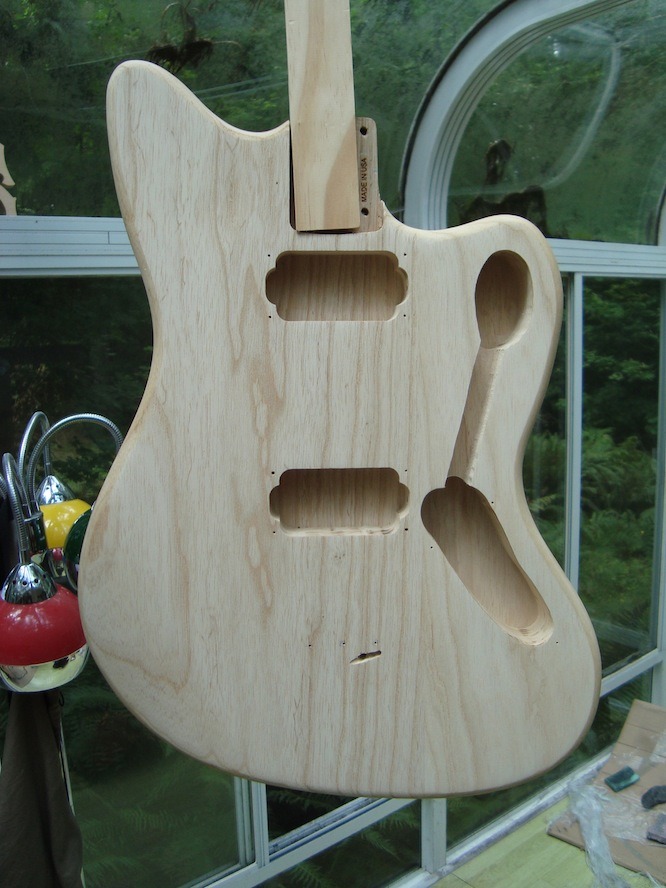
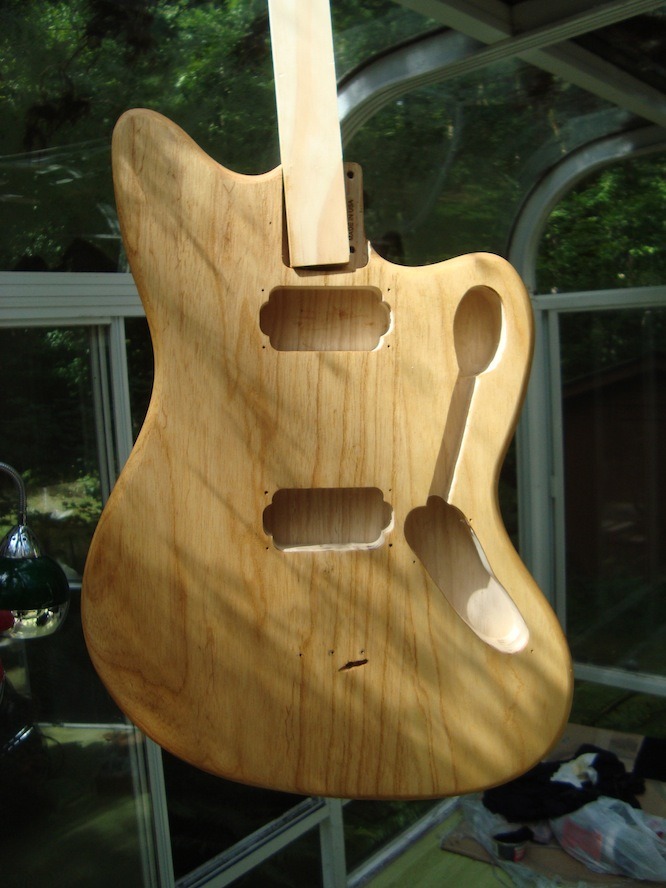
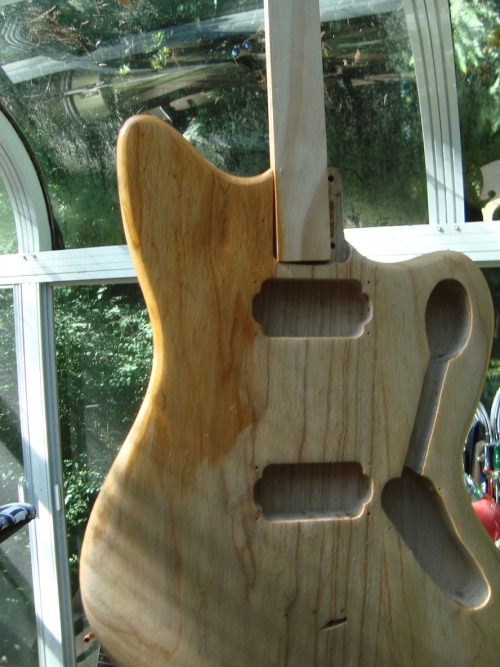
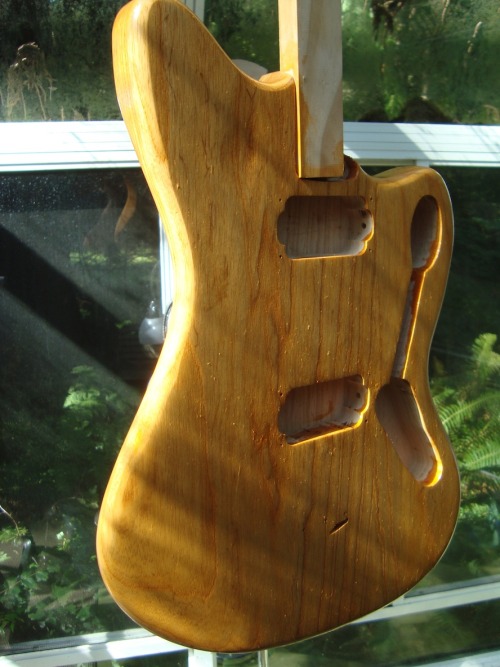
Colored oil based varnish finish mini tutorial.
Posted: Sun Sep 08, 2013 1:10 pm
Ever wanted to do a trans color but don't want to spray? Or want more of that "natural oil thing" well here you go.
This is a technique more from violin family building and repair then guitar so you just don't see people talk about this for guitars, but, it will work just fine and I will prove this as the tread gets underway.
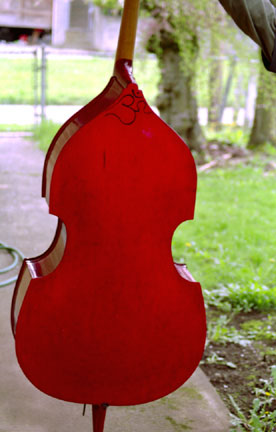
So yes I have done this before and have posted my recipe/finish schedule other places after I did this on my double bass.
Here is the bass.


So here is my recipe plus a bit of chat.
This is a technique more from violin family building and repair then guitar so you just don't see people talk about this for guitars, but, it will work just fine and I will prove this as the tread gets underway.
So yes I have done this before and have posted my recipe/finish schedule other places after I did this on my double bass.
Here is the bass.
So here is my recipe plus a bit of chat.
I am going to be using this in a basic way to finish my bass VI project orange so I'll be post picts of the whole thing.I took Arnold's advise given on this forum and tried whaterlox colored with artist oils. Most of what I did was "based" on what Ken McKay posted in a thread on [url="http://www.mimf.com/"]MIMF.com[/url] called "What is your favorite varnish pigment or color for violins?"
This is what Ken said
And here is what I did.
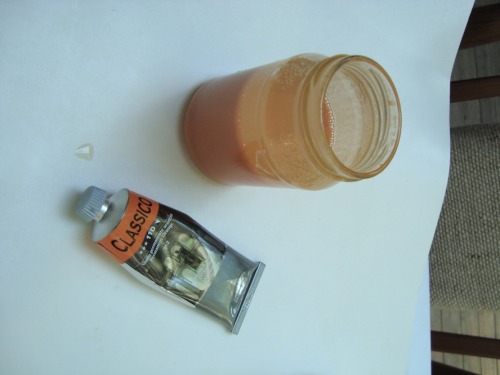
Materials used:
Waterlox High Gloss
Naphtha
Gamblin Artist’s oil Colors
1. “ground” - "wash coat" = 25%-75% Waterlox to naphtha mix; a small amount of turmeric was added to the naphtha a day before mixing to add a bit of gold color. And yes I strained it!
2. Glaze #1: 60%-40% Waterlox to Naphtha mix with a added 8% of Gamblin Alizarin Crimson was added for color, This was applied by hand [my hand were red for days], clear coat of 75%-25% Waterlox to Naphtha mix was then applied
Bass was then let to sit for a few days then sanded to 250 grit.
3. Glaze#2: 60%-40% Waterlox to Naphtha mix with a added 8% of Gamblin Alizarin Crimson, 4% of Gamblin Chromatic Black and 5% Gamblin Alizarin Violet were added for color; this was applied by hand again but ONLY to the scroll, top and sides, clear coat of 75%-25% Waterlox to Naphtha mix was then applied
Bass was then let to sit for a few days then sanded to 250 grit.
4. Glaze #3: 60%-40% Waterlox to Naphtha mix with a added 2% of Gamblin Alizarin Crimson, 8% of Gamblin Chromatic Black and 10% Gamblin Alizarin Violet were added for color; this was applied by hand again but ONLY to the scroll and top, clear coat of 75%-25% Waterlox to Naphtha mix was then applied.
Bass was then let to sit for a few days then sanded to 250 grit.
5. 3 clear coats of 75%-25% Waterlox to Naphtha mix to whole bass.
6. The top wasn’t getting the look I wanted so I sanded it in places with 200 grit down to the Alizarin Crimson coat in places to give the bass a worn and old look.
7. 2 clear coats of 80%-20% Waterlox to Naphtha mix to the top.
8. Fine sanding to whole bass, grits: 200-300-400-600-800-rotten stone.
9. Because of the dark color of the top scratches were still visible so a final buffing with novus 2 fine scratch remover.