Re: Going Vegan
Posted: Wed Apr 08, 2015 6:59 pm
this is an interesting read:
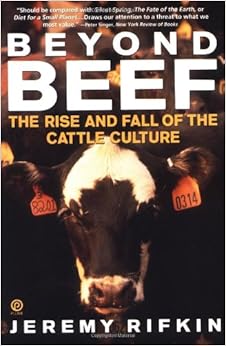
[youtube]http://www.youtube.com/watch?v=H6b7zJ-hx_c[/youtube]cheesecats wrote:it's all well and good to criticize modern agricultural production methods. but they have lowered costs, increased availability, and improved nutrition for billions of people around the world.
hey oscillateur, a vague and dismissive thing to say re 'bullshit'. best to be specific if there's a point you take issue with.oscillateur wrote:I can't comment that much about strict vegan stuff but I've been a vegetarian for more than 15 years, I get pretty full health check-ups for work including blood tests, etc. every year (as does everyone working in Japan) and I have no deficiencies whatsoever. And I don't take any supplement. I just eat good stuff, avoid junk food, etc. As I said, I'm not a vegan so I do eat milk-based products (I'm french, I need cheese) and eggs. But no fish/meat/seafood/etc.
So yeah, tabbycat's post does contain bits of truth but it also contains a sizeable amount of bullshit...
as to why i'm a pescatarian, it's partly ethical and eco. not ok with the way most (land living) meat is produced and processed. if i were to go back to small quantities (one or twice a week) of red meat (best quality iron and b vits) it would be via organic free-range game. but the reason i don't is the same reason i tried vegetarianism and veganism in the first place. i feel a bit awkward about the moral side of it. while i can be confident about the valid scientific basis underlying the physiological argument for retaining animal products in the human diet, morally i'm fudging it. which is why i put the disclaimer about that side of it right at the start of my original comment, before all else in fact. as it's a big part of the broader issue. but one which you can separate out if you want to make a specific physiological point, as i was doing.D.o.S. wrote:Maybe I've missed something -- why are we ignoring the moral and ecological/economic arguments?
This is a blanket statement void of enough information to make any type of conclusion at all.tabbycat wrote:a vegatarian who consumes eggs and milk will always be better nourished than a vegan.
information requested:MEC wrote:This is a blanket statement void of enough information to make any type of conclusion at all.tabbycat wrote:a vegatarian who consumes eggs and milk will always be better nourished than a vegan.
i think this is a pipe dream given the realities of today's world. efforts are being made to mitigate the harmful effects of intensive agriculture on natural resources, but to think we can totally go back to methods used centuries ago is, to me, ridiculous. as i said, there is no easy fix. there has been much research into this issue in recent decades, and it seems to me flexible, localized solutions are called for and being implemented. but even the experts are divided and disagree on many of the issues.alexa. wrote:[youtube]http://www.youtube.com/watch?v=H6b7zJ-hx_c[/youtube]cheesecats wrote:it's all well and good to criticize modern agricultural production methods. but they have lowered costs, increased availability, and improved nutrition for billions of people around the world.
Watch, cuz you have been misinformed.
Pipe dream.. even tho thousands of people are using it with results agriculture can't even dream of?cheesecats wrote:i think this is a pipe dream given the realities of today's world. efforts are being made to mitigate the harmful effects of intensive agriculture on natural resources, but to think we can totally go back to methods used centuries ago is, to me, ridiculous. as i said, there is no easy fix. there has been much research into this issue in recent decades, and it seems to me flexible, localized solutions are called for and being implemented. but even the experts are divided and disagree on many of the issues.alexa. wrote:[youtube]http://www.youtube.com/watch?v=H6b7zJ-hx_c[/youtube]cheesecats wrote:it's all well and good to criticize modern agricultural production methods. but they have lowered costs, increased availability, and improved nutrition for billions of people around the world.
Watch, cuz you have been misinformed.
http://www.misa.umn.edu/Search_and_Ask/ ... /index.htm

i did watch the video. and i understand permaculture.i agree with you that these production systems are great, and they should be used where they can be. but there's no way they will feed the world, at least not anytime soon. and there are trends working against sustainable agriculture, like the increase in Asia, Africa, and Latin America in the demand for and consumption of meat, sugar, and processed foods that rises in concert with income levels. groups are working hard in these areas to use sustainable practices, but it's a challenge.alexa. wrote:Pipe dream.. even tho thousands of people are using it with results agriculture can't even dream of?
Have you even watched the whole video? The two videos I posted under it, show already working and established systems that work commercially, mind you.
No seriously, I stand that people are just plainly indoctrinated when it comes to agriculture. Even the UN classified eco and organic agriculture as viable food sources a couple of years ago; and permaculture is FAR more efficient then that.
Fear mongering people into famine, cuz you need to buy the oil based products to make agriculture work. No oil-based products and you'd have no pesticides, no fertilizers, no gas for the machinery.. monopoly party wooo
snap out of it
http://www.worldwatch.org/node/6294A widely cited 2006 report by the United Nations Food and Agriculture Organization, Livestock's Long Shadow, estimates that 18 percent of annual worldwide GHG emissions are attributable to cattle, buffalo, sheep, goats, camels, pigs, and poultry. But recent analysis by Goodland and Anhang finds that livestock and their byproducts actually account for at least 32.6 billion tons of carbon dioxide per year, or 51 percent of annual worldwide GHG emissions.